
Flight tips for people living with a stoma
16th Jun 2026
Jetting off this summer? Ostomate and former air steward Raphaela Reeb (pictured above) shares her air travel tips for long- and short-haul flights.
Pack extra ostomy supplies
Preparation is key. Before your trip, consider the destination in terms of availability of ostomy supplies in case you run out. Research local pharmacies at the destination – try to familiarise yourself with services you may need before you arrive.
I’d say carry 1½ times more supplies than you normally do. And remember, if your destination is somewhere hot, adhesives might not be as effective owing to increased perspiration, or you might have to do more bag changes if you’re swimming. So always pack more.
Just six weeks after ostomy surgery, I booked a flight to South Africa but was unsure if I could take my adhesive remover spray on board. I knew I could get the spray and other medical supplies at my destination but discovering I could indeed take it on board gave me so much more confidence.
Don’t be caught out by a lack of supplies on a short haul / short break either. On a visit to Barcelona, I found I was running low, but the local pharmacy didn’t have what I needed. They were willing to order from Amazon, but I would’ve had to pay for a whole box, at 100 euro, when I only needed 10 bags.
Get comfortable on board
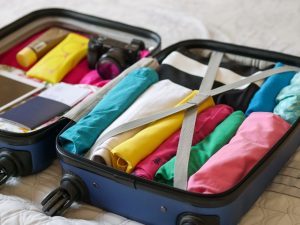
Wear comfortable clothes – potentially carry something to change into if it’s a long flight. I bought maternity leggings to give my stoma bag more room, and it gives you extra warmth against those cold hours overnight. Take a warm extra pair of socks and a shawl or cover-up in case they don’t have enough blankets on board.
Before boarding the plane, do a bag change even if it’s not necessary. I know people sometimes worry about what the air pressure may do to their stoma bag, but I’ve never heard of one bursting. To be on the safe side, I’d advise against drinking any carbonated drinks just before or during the flight because obviously that will add air into the bag.
Airport security
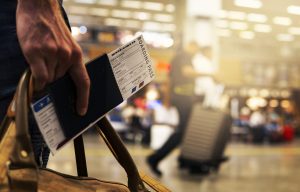
British airports are improving their management of ostomates passing through airport security in recent years, largely thanks to campaigning by IA groups who have suffered indignity through officials’ lack of awareness or understanding on their travels.
Accessorise with the Hidden Disabilities sunflower lanyard, which is recognised in most Western countries. It will enable you to travel more swiftly through the airport and on and off the plane – giving you priority boarding at no extra cost. Please note, as of 2026, Aena-operated airports in Spain no longer recognise the ‘Sunflower’ and now request people carry their own Aena ‘invisible disabilities’ badge.
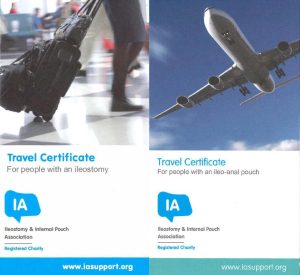
Also remember to carry an IA Travel Certificate, which does the job of informing transport authorities (in multiple languages in the same certificate) about your stoma or internal pouch. When backed up with a note from your GP, this serves as a reminder to security staff to show sensitivity if they meet you. Free IA Travel Certificates are available by calling IA National Office on 0800 0184 724 or emailing [email protected]
Hand luggage essentials
Always pack your ostomy supplies in your hand luggage. Never put any medication or supplies in your hold luggage because I remember from my time working in the airline industry, there were so many passengers distressed during a flight because they didn’t have their medication to hand, be it asthma sprays or diabetic medications. That really poses a problem.
I don’t know of any airline that will deny you free extra hand luggage if you say it’s medical supplies – but you must tell them beforehand. It’s in the airline’s interest as well, as they don’t want problems on board.
For emergency medical situations, we are well equipped. The best place to have a heart attack can actually be on board, provided the aircraft is close enough to an airport to land quickly. If instant medical attention is needed, we are trained and have equipment such as a defibrillator to hand, but we do not carry anything for an ostomy.
Where best to sit on the plane with a stoma
It’s not necessary to book a seat near the toilets. I’ve flown so much and find being near toilets extremely noisy, especially when flying long haul, trying to get some shut eye.
If you sit near the toilet, there’s constantly people going in and out. You hear that door all the time, and the flush. So, it depends on you: do you value a quick entrance to the toilet, or would you prefer to get more rest further away, perhaps in an aisle seat?
Here’s an insider tip: on a long-haul flight, people tend to use the toilet as soon as the lights go back on in the morning, so to overcome that, ask a crew member to let you know when they’ll be serving breakfast 10 or 20 minutes beforehand. Then there’s no pressure, and nobody queuing outside the toilets because the lights will still be switched off.
Aeroplane toilets
I was chief flight attendant and always appreciated when passengers came to me with their medical issues as I would then communicate it to my entire staff.
Alerting the crew of your medical condition in the early stages of the flight gives them time to react accordingly, because if you haven’t told anybody and there’s an issue, usually time is of the essence. If you need to use the toilet, chances are 10 other people do too. But if you’ve forewarned the crew, they’ll be able to help – even if it means accessing toilets designated for the crew only, if available. The crew really are your best allies.
I find plane toilets the best place for us ostomates to do a bag change because there is a fold-down table for your supplies, a hook, mirror, and water within arm’s reach. It’s much more convenient than any other toilet!
And don’t worry about anyone overhearing any noises. Nobody would hear anything as there’s so much background noise!
Staying hydrated on board
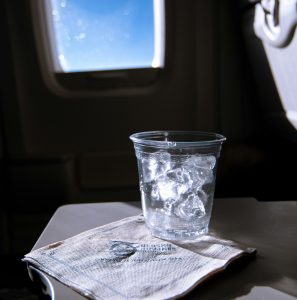
Even the crew has to drink a lot because they say the air in an aircraft is as dry as that in the Sahara. As soon as you feel thirsty, you’re already dehydrated! When you tell the crew about your condition at the start of the flight, I would mention that you’ll need more water than what is normally served. I would also advise against alcohol on the flight, which will dehydrate you further.
In-flight meals
Be mindful that airline food might not suit your dietary needs. There are many different options for special meals, but there’s nothing really there for an ostomate. When I went on my first long haul flight after surgery, I opted for a vegan meal but it turned out to be Indian food and was far too spicy. It had corn too so I couldn’t manage it.
I flew professionally for 30 years, often flying at midnight. I saw my colleagues eat steak, fish, all sorts of things at all sorts of crazy times, but I never did because it led to an upset stomach and digestion problems as my body clock was out of tune – this was long before my ostomy surgery.
Instead, I would have miso soup pouches that you can take fairly easily through security, because it’s just the miso soup paste. Then you just ask the crew to top it up with hot water in a mug. For me it’s a lifesaver as it feels like a meal.
You could also take something with you that you could eat cold, like an energy bar. People always think, oh, the meal is coming, I have to eat now. No, you don’t have to eat – just listen to your body.
Children with stomas
Be sure to tell the cabin crew of the child’s condition. Depending on their age, they will have a normal seat. Some flights will have a spot for cribs to be put on to the wall, but that’s only for babies. As you would for yourself with a stoma, make sure they have more than what they would normally need in terms of medical supplies.

Connecting flight
Options for what to do with your time while waiting for a connecting flight depends on where you’re flying from and airport facilities. I like to go to the frequent flyer lounge, even though I’m not one anymore! You can always ask to book a time slot. It might cost (I think in Germany it costs about 30 euro), but you could potentially have a bathroom/ shower available there. Lounges also have reclining chairs and a range of food. While the price may sound a lot, what you get in return is quite good value. If you have several hours between flights, it may be worth paying as you could easily spend that just walking around the airport shops and cafes.
Travel with confidence
It’s only natural that ostomates may feel a bit apprehensive before travelling for the first time – I did even with my professional background, yet none of my anxieties were founded.
Cabin crew are trained to be especially empathetic towards people with disabilities – it’s a code of conduct. They have your best interests at heart, so you should always feel confident that you’re in safe hands.
About the author: Raphaela is a bowel cancer survivor whose life took a new direction after her diagnosis and life-changing surgery. Before this, she spent decades travelling the world as a senior airline purser, a role that gave her a deep appreciation for people and cultures. Today, she is the host of Stoma4Life on UK Health Radio, where she raises awareness about bowel health and life with a stoma. She also works as a life coach for ostomates, using her own experience to support, encourage and empower others: www.stoma4life.com